[ 04 · MONOGRID · 2022 ]
Istituto Marangoni — Dubai Fashion Show
Motion graphics for a Dubai runway and a metaverse pavilion at once.
A phygital runway for Istituto Marangoni, staged at the Museum of the Future and inside the school’s metaverse at the same time. At MONOGRID I made the motion graphics that presented the students and their looks; Alessandro Casucci did the 3D.
- Role
- Motion graphics
- Year
- 2022
- Tags
- Motion · Live event · Metaverse
[ 01 · Context ]
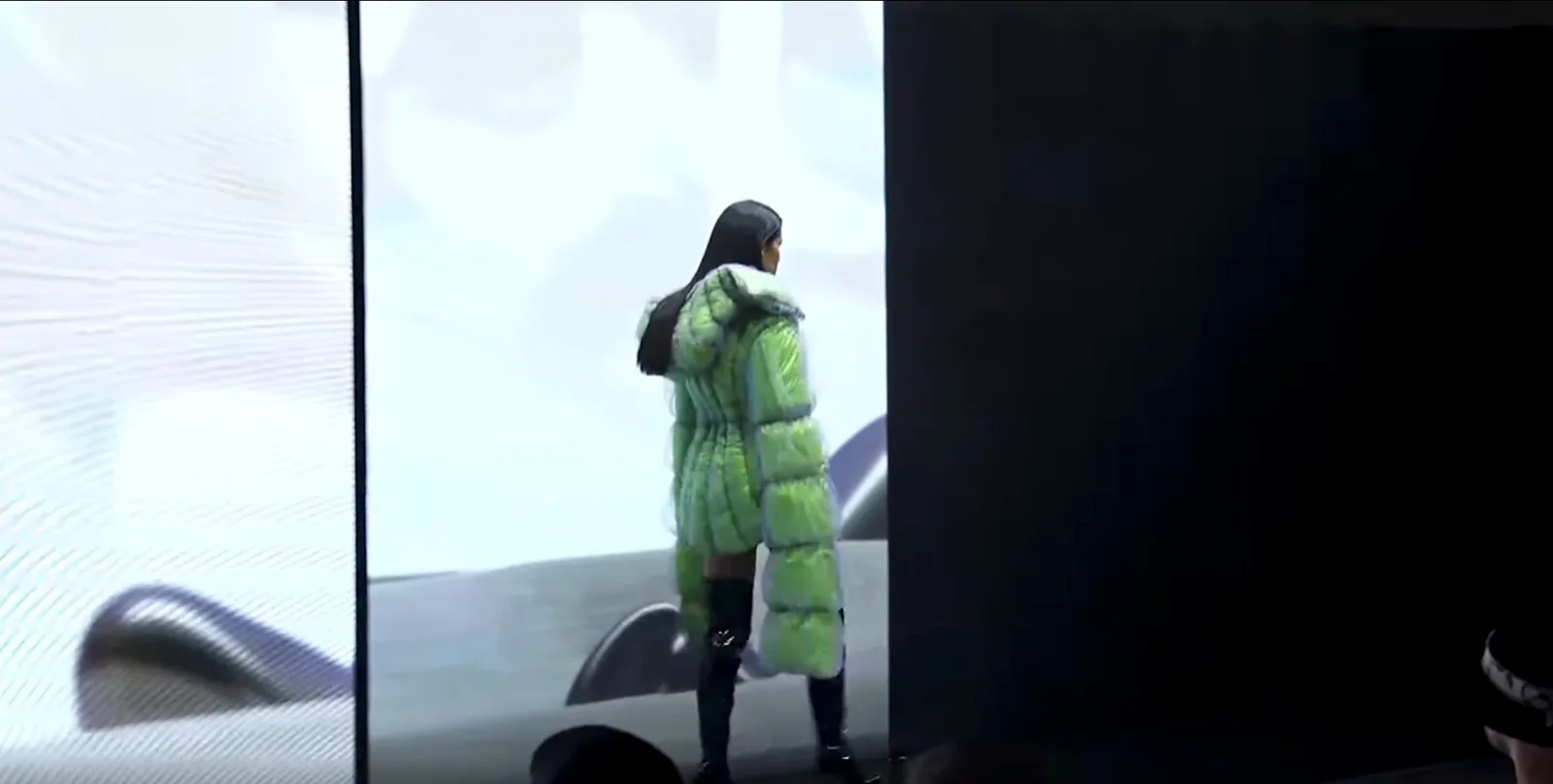
Istituto Marangoni was opening a campus in the UAE and wanted the launch show to say something about the school. MONOGRID had already built Talent District, the school’s metaverse, a few months earlier. The Dubai show, Reinventing the Future, ran at the Museum of the Future in September 2022 and was streamed into a new pavilion inside that world.
Students from the European schools showed their work on both runways. Rahul Mishra, a Marangoni alumnus, closed the night.
[ 02 · Role ]
Motion graphics. Every student and every look needed a presentation that worked on the LED wall in Dubai and in the pavilion’s stream at the same moment: names, looks and transitions, cut to the runway timing. I designed and animated those. The case page credits me under UX/UI Design with Marco Trevisani and Margherita Cucchi.
The 3D is my friend Alessandro Casucci’s work, with the studio’s 3D team: they built the pavilion, the digital twins and the set.
[ 03 · Problem ]
Two audiences had to be served off one clock. The room in Dubai had seats, lights and a runway. The metaverse had browsers and people arriving from anywhere at any minute. Both had to see the same looks at the same moment, and neither could end up feeling like the overflow room.
[ 04 · Decisions ]
- 01
A pavilion that copies the building it streams from
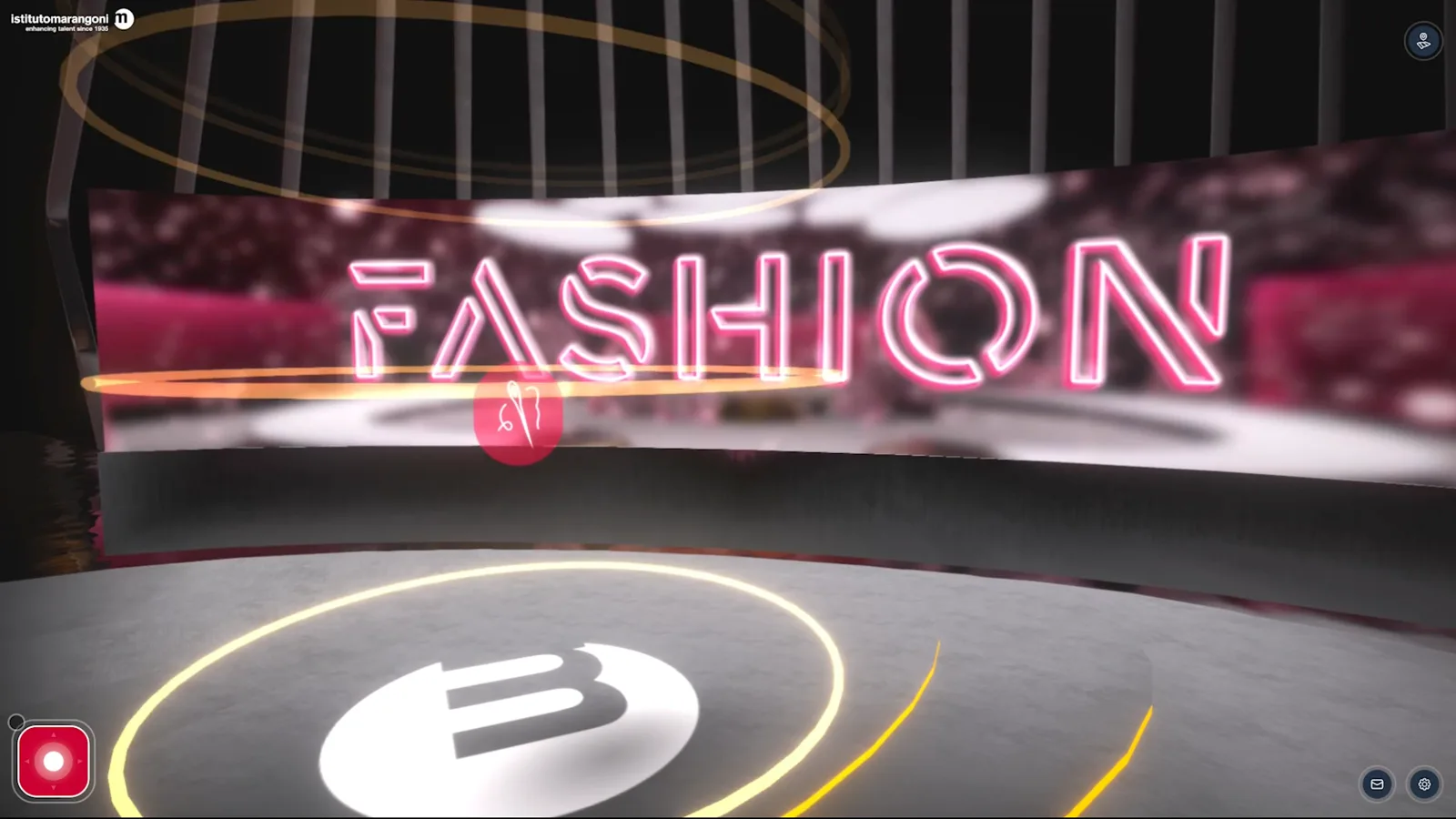
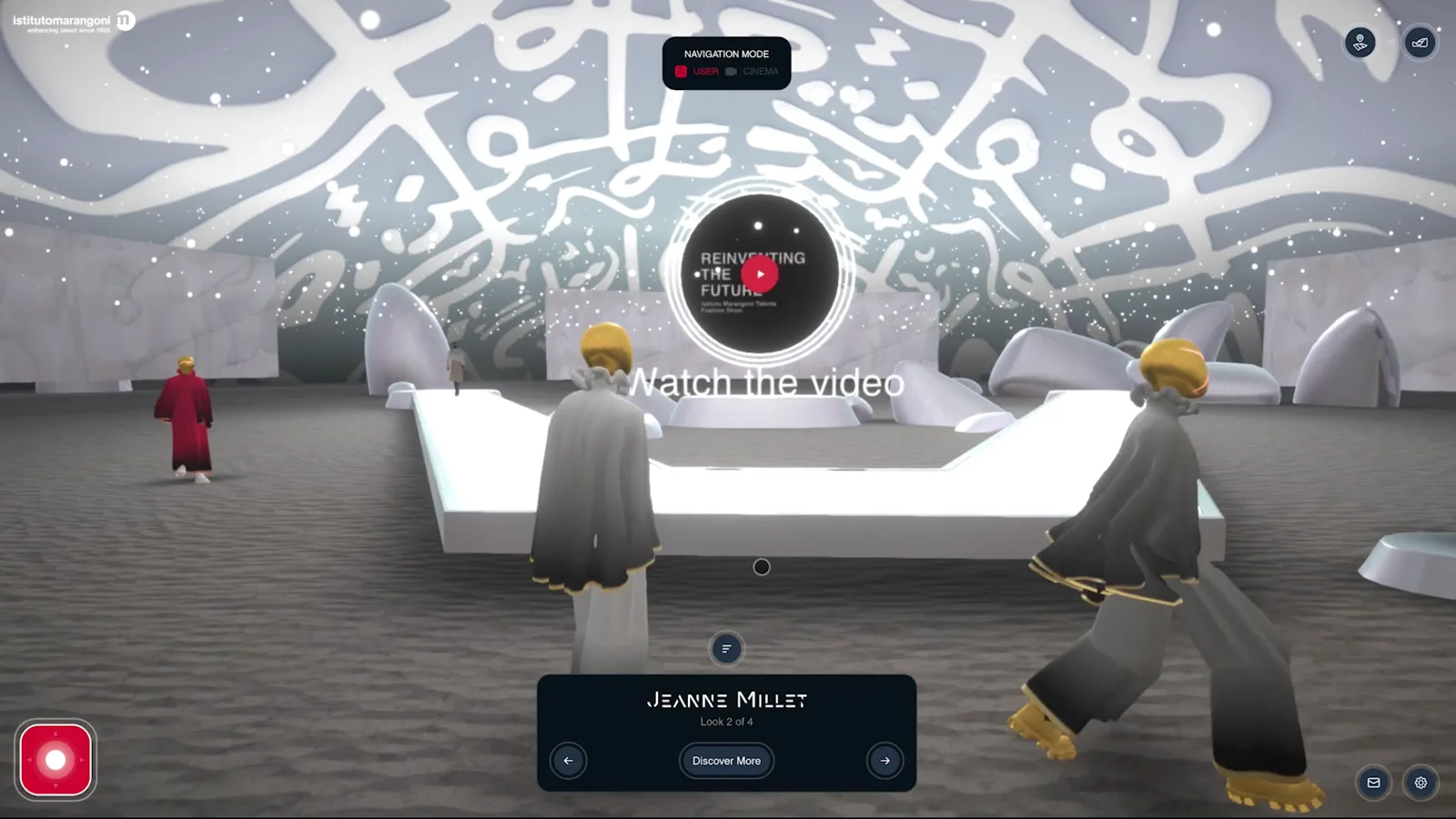
The team modelled the metaverse venue on the Museum of the Future instead of inventing a space with an identity of its own. That cost the freedom of a 3D world with no structural limits, and a shot at a stronger visual signature. It bought one landmark both audiences recognised, so the stream and the 3D space read as a single event.
- 02
Stream and showcase in the same room
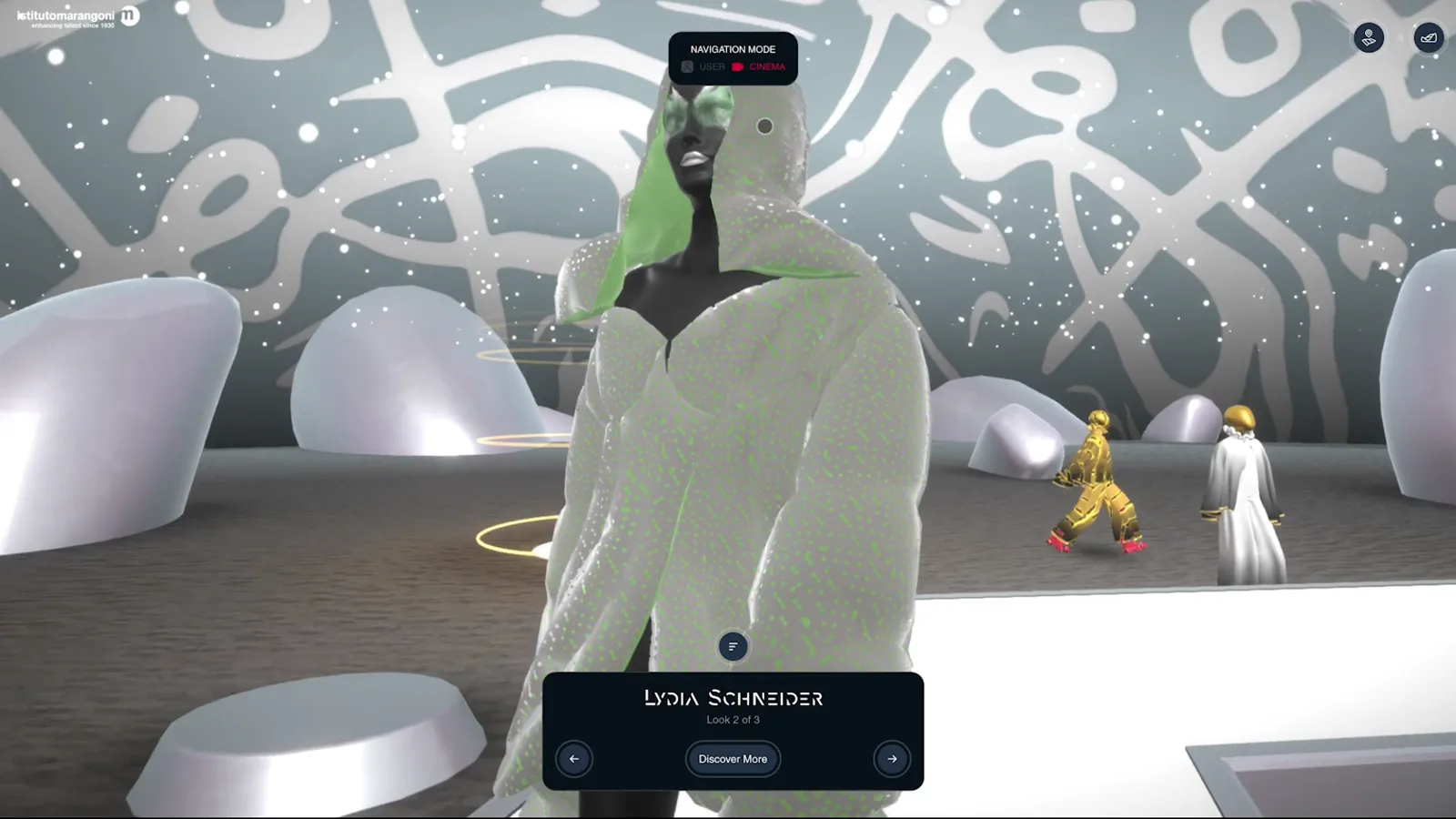
The broadcast sits on a screen inside the pavilion, beside looks worn by avatars, instead of on a separate player page. A plain video page would have been steadier and easier to read. The harder layout lets a visitor step away from the video, study a garment, then come back, and the looks stay there after the stream ends.
- 03
Digital twins rendered ahead, not composited live
On the runway, models and their digital twins appeared in turn against a large LED wall. Every twin had to be modelled, dressed and rendered before the doors opened, which ruled out reacting to anything on the night. In exchange the set behaved the same at every rehearsal, and a cue could be re-run.
[ 05 · Outcome ]
Three students who could not travel to Dubai presented their work through the pavilion, which is the clearest thing the metaverse side added (source: MONOGRID case page). The show ran on both runways at once and closed with Rahul Mishra, the first Indian designer to show at Paris Haute Couture.
No audience, concurrency or dwell-time figures were published for the pavilion. So I can describe what we delivered, but I cannot tell you how well the metaverse side worked.
[ 06 · Credits ]
- Motion graphics: Federico Vietti · 3D: Alessandro Casucci with the MONOGRID 3D team
- Executive Creative Director: Francesco Bernabei
- Creative Lead: Valentina Trevisanello
- Producers: Valeria Vio, Marta Bellomo, Francesco Taddeucci
- Lead 3D Artist: Rudy Faletra · 3D Artist: Mario Bernaudo, Eugenio Battoglia, Alessandro Casucci
- UX/UI Design (credit line): Marco Trevisani, Margherita Cucchi, Federico Vietti
- Technical Director: Daniele Pelagatti · Tech Lead: Alberto Parziale
- MONOGRID for Istituto Marangoni, September 2022
- Tools: Resolume Arena, Marvelous Designer, Substance Painter, ZBrush, Blender, Cycles, After Effects
[ Contact ]
Let’s talk
Open to product design roles, and to good collaborations.